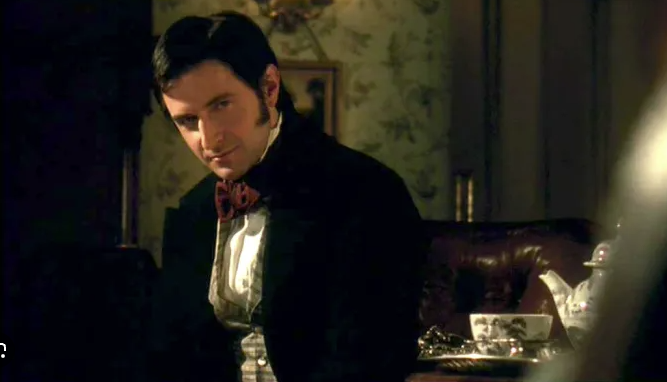
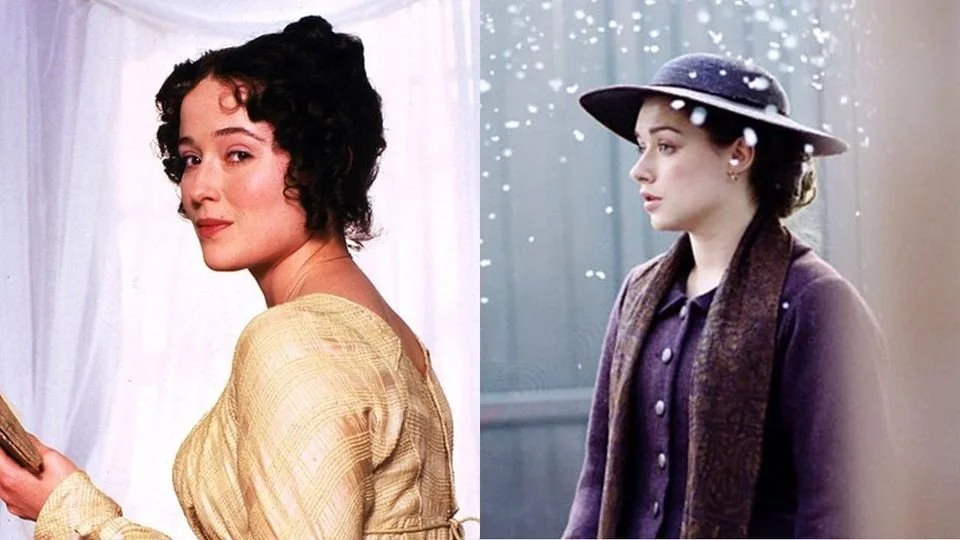
Margaret Hale and Elizabeth Bennet: still relevant role models?

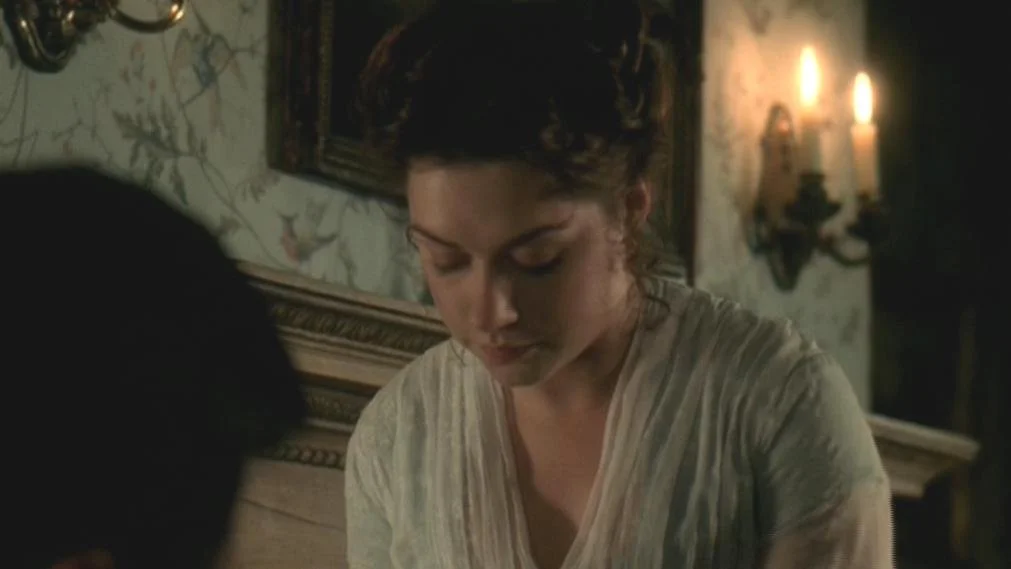
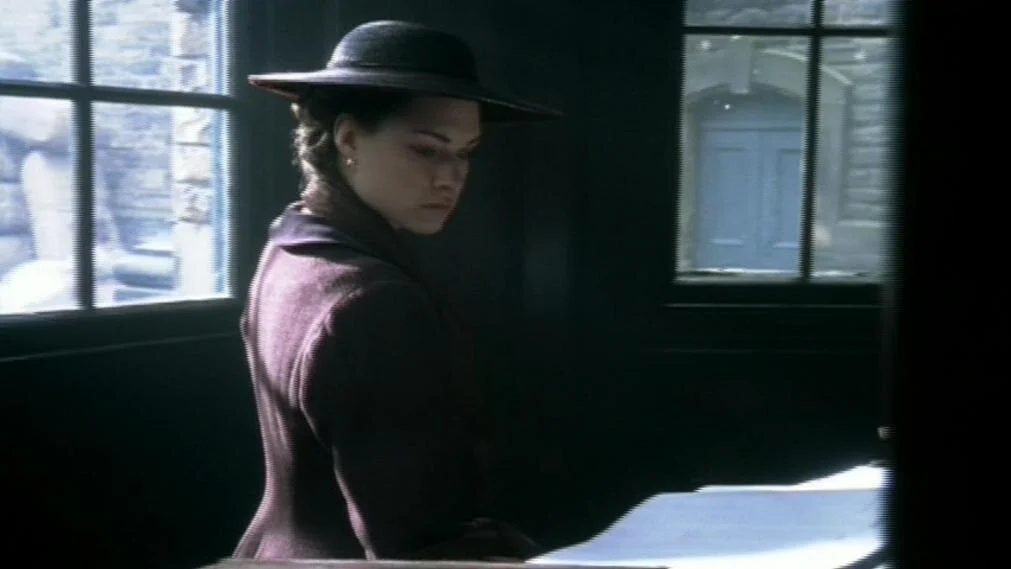
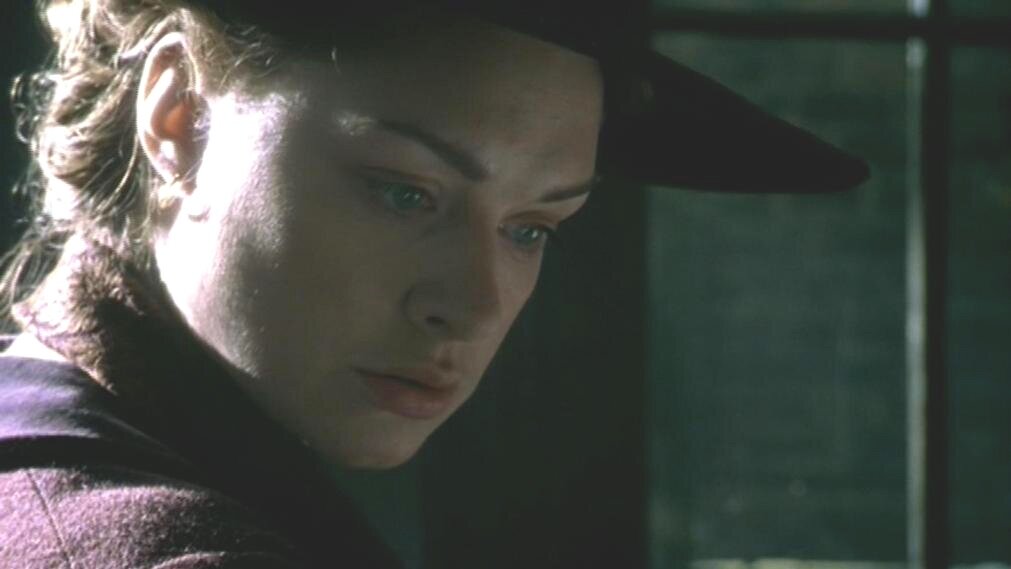
I enjoyed the recent lecture event sponsored by Elizabeth Gaskell’s House and Jane Austen’s House that focused on Margaret Hale and Elizabeth Bennet. The presentation about Elizabeth Bennet pointed out several reasons why she would have been a role model of female empowerment in Austen’s time.

So to continue the conversation, I’d like to share some of the points that I took away from the talk and add a few more qualities these women expressed that make them so admirable. Here are some of the traits that make Elizabeth Bennet and Margaret Hale relevant role models then and today:

The power of ‘NO’

The first and primal point of power in both stories is that both Margaret and Lizzy have the wherewithal to reject not just one but two proposals of marriage: one conveniently comfortable and the other overwhelmingly advantageous. Both of them reject the catch of the county! And they both reject a moderately comfortable proposal of marriage received before that.

How courageously bold it was for these particular women of modest means to say “no” to an opportunity that reasonable persons of the day would assume they should be grateful for!

Self-determination

So why did they reject such tempting offers of security and comfort? After all, finding a wealthy and well-respected husband would have been the aim of any young woman of the age.

The answer is that they know themselves. They know what their highest values are, and so they know the conditions which would make them content or miserable.

They refuse to subjugate their happiness by settling for any kind of loveless marriage. They’re taking charge of their own longterm happiness.

SELF-Confidence

But how dare they? What gives them the notion that they can create their own conditions in life when they are meant to obediently follow the strict patriarchal customs of their world?

Both Elizabeth Bennet and Margaret Hale are confident of their own worth as intelligent and sensible human beings. They know their own value. They don’t constantly seek approval from others, and they don’t look to others to define who they are. They rely on their own strength of character and purpose to move them through life.

With such self-assurance, they are able to make decisions that may go against the grain of society’s expectations or customs.

INDEPENDENCE
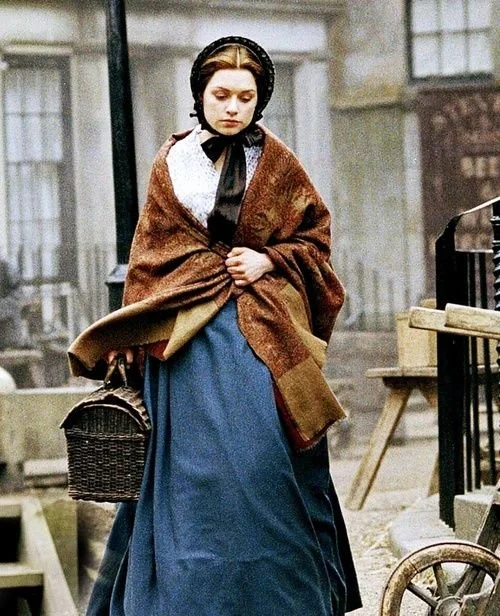
Naturally, a self-assured and confident woman has the right to do as she pleases and go where she likes within reason of her situation and surroundings.

However, Margaret was constrained to never go out walking alone while she was in London, and Caroline Bingley deemed it a type of impertinence that Elizabeth walked from Longbourn to Netherfield on her own.

“To walk three miles, or four miles, or five miles, or whatever it is, above her ankles in dirt, and alone, quite alone! what could she mean by it? It seems to me to shew an abominable sort of conceited independence…”

The concept of taking the initiative to go see her ill sister, despite the muddy weather and the distance shows a great independence of mind.

Margaret also took great freedom in Helstone and in Milton to walk alone where she liked. Visiting Bessy, she often went to the section of town where the mill workers lived, walking down alleys in which her cousin Edith would have never stepped foot.

Calm Strength in a Crisis

Both Margaret and Elizabeth showed great strength and maturity in meeting any unexpected crisis. Elizabeth has had to endure her mother’s almost daily rants for years, so when the real crisis of Lydia’s running away comes upon the family, she’s able to keep her head and not fall into hysterics.

Margaret shows extraordinary strength and calm in the succession of unimaginable upheavals and deaths that happen in a span of three years. She does have moments when she breaks downs—even faints dead away—but for the most part she soldiers on despite practically every conceivable difficulty and loss.

Concern for Others

One of the reasons they are able to stay calm and strong is because they know that others depend upon their help. Elizabeth does all in her power to help Jane and even her foolish sister, Lydia. Lizzy loves her family, despite their faults.

Margaret is a tower of strength for her parents. She wants to help Bessy, her brother, and the starving workers. She exhibits a sincere caring for those around her. It gives her purpose to be helping others.

Aware and Alert

In order to be of any help, you first need to be aware of the situation of others. Margaret tries to learn and expand her understanding of the world around her in Milton. She’s interested in hearing the experiences of the poor workers and the ideas of the rich manufacturers.

Elizabeth is also very intelligent and observant. She pays attention to everything that is going on around her and often perceives the motives behind the behavior of others.

PERCEPTIVE OF THEIR OWN FAULTS

Of course, Elizabeth and Margaret are not always keenly aware of what’s really going on. They most definitely have their prejudices and blindspots.

But when they do come to realize that they have judged in error, they are able to acknowledge their mistaken perspective and change their minds.

Although it’s an uncomfortable awakening, here is Margaret’s reaction when she realizes Mr. Thornton has saved her from the police inquest:

Mr. Thornton, above all people, on whom she had looked down from her imaginary heights till now! She suddenly found herself at his feet, and was strangely distressed at her fall.


Not Intimidated

One of the greatest scenes in Pride and Prejudice is the dramatic confrontation between Elizabeth Bennet and Lady Catherine de Bourgh. Although Lady Catherine acts as a sovereign superior in every manner and situation, Elizabeth refuses to be subjugated by the ridiculous and rather vicious warnings of Lady Catherine to stay away from her nephew, Mr. Darcy. It’s a fantastic fireworks show of self-confidence, amazing poise, and self-determination on Lizzy’s part—all in one scene!

Margaret also faces a rather haughty attack on her character by the stern and commanding Mrs. Thornton. And likewise, Margaret refuses to be subjected to false accusations against her character and swiftly leaves the steely matron quite nonplused after their brief interaction.

“What must you think of me, madam?” asked Margaret, throwing her head back with proud disdain, till her throat curved outward like a swan’s. “You can say nothing more, Mrs Thornton. I decline every attempt to justify myself for anything. You must allow me to leave the room.”

And she swept out of it with the noiseless grace of an offended princess. Mrs. Thornton had quite enough of natural humour to make her feel the ludicrousness of the position in which she was left. There was nothing for it but to show herself out.

I’m sure there are more traits or qualities which make these two literary heroines great role models for women — or anybody! What do you love most about these fabulous ladies and their spirited power?

And don’t forget to check out upcoming online events at Gaskell’s House. This year their focus is on North and South!


Giveaway winner announcement

Thanks to everyone who expressed their enthusiastic interest in this special North and South giveaway.

There were 28 entries in this contest! That’s a fantastic indication that there is still great interest in published North and South fan fiction.

And the winner is….

Sheri

Congratulations, Sheri, on your win! I hope you’ll enjoy taking time to get cozy and settle down to read your new books this winter!

I’ll be doing what I can to encourage more people to publish their North and South stories, so that there are more books to be had by everyone. And I hope readers will encourage writers on Internet sites to consider publishing their work so that more people can enjoy extending the Thornton and Margaret love!

Is there a future for published N&S fanfic?

Interview with Trudy Brasure

In case you missed it, here’s a link to an interview I did with Rita at From Pemberley to Milton. We talked about the lack of published North & South stories.

The interview is here.

Giveaway contest

In my last blog post, a group of authors joined me in offering a giveaway to celebrate ten years of published North and South fan fiction.

The contest ends December 10th, so if you’d like to enter please leave a comment and your email address here.

Review of A Heart for Milton

And for anyone who hasn’t yet read my first book, there’s an anniversary review of it at From Pemberley to Milton.

Celebrating Ten Years of published ‘North and South’ Fan Fiction

A Heart for Milton is ten years old! When I hit the ‘publish’ button on my story in October 2011, I didn’t really know what to expect. I was excited to make my story available to a wider world. At that time, self-publishing was really just starting to take off. It’s thrilling to know, ten years later, that thousands have read and enjoyed my romantic variation of Elizabeth Gaskell’s classic novel.

A Heart for Milton has the illustrious honor of being one of the first few North and South fan fictions to be published. Since 2011, more authors have published their versions of what could have happened between John Thornton and Margaret Hale. And I know that eager fans of Gaskell’s original tale would love to gobble up more!

To help celebrate this special fandom’s ten year publishing anniversary, Rita at From Pemberley to Milton will be posting a few North and South pieces this week on her blog. Keep an eye out for her reviews and an interview — with me!

Book Bundle Giveaway!

I loved writing A Heart for Milton and it has been my pleasure to get to know many of the other fan fiction authors. A few of us got together not long ago to publish an anthology of short stories entitled Falling for Mr. Thornton. And this lovely group of authors is joining me in celebrating ten years of North and South fan fiction by contributing to a book giveaway their own first published fan fiction story!

The bundle giveaway prize will include a paperback copy of the books below. (Exceptions: How Far the World Will Bend is an ebook prize. The Bennet Wardrobe series is a 4-part audiobook prize.)

To enter this contest, just leave a comment that indicates your interest and leave your email address so that we can contact the winner. (USA contest only)

The giveaway winner will be chosen December 10th.

Here are the links to each book in our prize collection:

No Such Thing as Luck by Nicole Clarkston — N&S variation

Margaret of the North by Evy Journey — N&S continuation

A Heart for Milton by Trudy Brasure — N&S variation/continuation

Collide by Melanie Stanford — modern N&S variation

The Gentleman’s Impertinent Daughter by Rose Fairbanks — P&P variation

How Far the World Will Bend by Nancy Klein — N&S time travel story

Common Ground by Elaine Owen — N&S continuation

The Whistle Echoes by M Liza Marie — N&S continuation

the Bennet Wardrobe series by Don Jacobson — stories based on P&P


John Thornton's search for home

In the previous blog post, we looked at Margaret Hale’s search for home. But what about John Thornton’s yearning for home? Although Thornton isn’t tossed from house to house like Margaret, isn't he also—in a way—searching for a satisfying sense of home? His quest has nothing to do with location. His search is an almost unconscious desire for a more expansive sense of purpose and deeper personal satisfaction.

His life of work-work-work needs balance. He’s been working hard to build up his mill non-stop for quite a number of years.

I find a conversation he has with Mr. Bell about life-balance and motives intriguing and very endearing:

Mr Bell: “I wonder when you Milton men intend to live. All your lives seem to be spent in gathering together the materials for life.”

Mr Thornton: “By living I suppose you mean enjoyment.”

“Yes enjoyment, - I don’t specify of what, because I trust we should both consider mere pleasure as very poor enjoyment.”

“I would rather have the nature of the enjoyment defined.”

“Well! Enjoyment of leisure — enjoyment of the power and influence which money gives. You are all striving for money. What do you want it for?”

Mr. Thornton was silent. Then he said, “ I really don’t know. But money is not what I strive for.”

“What then?”

It is a home question. I shall have to lay myself open to such a catechist, and I am not sure that I am prepared to do it.”

I love this answer! Mr. Thornton’s motive in all his work has essentially been to establish a home for his family. This makes sense when you realize what he has been through. His father’s death threw the family out of their home years ago. John has been a rock of security for his family ever since.

But Mr. Bell has hit a soft spot, hasn’t he? And Thornton really has no answer as to why he continues to work so hard, accumulating more wealth. He has been on autopilot for years, spending his efforts on creating a successful and efficient business that will secure comfort and a worthy position for his family.

We do see him, however, take a small step toward slowing down his business-driven life to do something for himself, to take some time for enrichment. Thornton is genuinely interested in reading the ancient classics with Mr. Hale—an expenditure of time of which his mother disapproves. His interest in doing this suggests that he is looking for something deeper and broader than just managing a mill and accumulating wealth. He has finally reached a level of financial security that allows him a sense of freedom to consider what might be missing from his life.

And then Margaret sweeps into his world, and—lo and behold—she appears to have all the qualities of strength and self-confidence he admires AND a mesmerizing blend of gentler qualities that he didn’t even realize he was longing for: tenderness, beauty, and compassion. Margaret’s powerfully presented perspectives open Thornton’s rather closed mind and heart to consider new possibilities. Margaret throws his rigid train of thought off track and stirs up emotions in him like nobody else! She really makes him start to recognize that there may be more to life than what he’s been living!

Then when Thornton comes to tea, he studies the sweet bond of teasing affection between Margaret and her father with a strong yearning for the same open, tactile affection. He feels the warmth and intimacy of the Hale’s more casual and country decor: fruit in bowls for consumption, books left open, worn furniture. At his home, everything is perfectly arranged and immaculate. His mother, although she loves him dearly, creates a home that reflects her strict sense of order.

There’s a very specific comparison of the two homes in the book. Here’s how Margaret perceives the Thornton home, which she feels has an effect of “icy, snowy discomfort.”

There was no one in the drawing-room. It seemed as though no one had been in it since the day when the furniture was bagged up with as much cares as if the house was to be overwhelmed with lava, and discovered a thousand years hence….Everything reflected light, nothing absorbed it….Wherever she looked there was evidence of care and labour, but not care and labour to procure ease, to help on habits of tranquil home employment; solely to ornament, and then to preserve ornament from dirt or destruction.

Thornton is aware of the chilliness of his own home, for he is quite affected by noticing the very different details of the Hale’s little drawing-room.

Somehow that room contrasted with the one he had lately left…[which] was twice—twenty times as fine; not one quarter as comfortable. Here there were no mirrors, not even a scrap of glass…[but] a warm, sober breadth of colouring, well relieved by the dear old Helstone chintz-curtains and chair covers….there was a stand with a tall white china vase, from which drooped wreaths of English ivy, pale green birch, and copper-colored beech-leaves. Pretty baskets of work stood about in different places: and books…lay on one table, as if recently put down….It appeared to Mr. Thornton that all these graceful cares were habitual to the family; and especially of a piece with Margaret.

It would seem he wasn’t really noticing the decor at all…

Mr. Thornton is becoming dissatisfied with the restrictive atmosphere of the home his mother has created. He is yearning to push beyond his mother’s limited ambitions and views. He feels the compulsion to be free to learn and grow, to consider new habits and concepts of purpose. Although Hannah Thornton admires and worships her son, she doesn’t really allow him to expand or express himself in any new way. She doesn’t understand his desire to study the classics or his interest in creating a kitchen for the mill workers.

It is Margaret’s compassion for the mill workers that compels Thornton to think more deeply about his influence over his workers’ lives, and opens his heart to higher motives. Eventually, it becomes all-important to Thornton to continue to explore possible ways that masters and workers can work together to improve business and quality of life.

It would be inevitable that Thornton would want to live in a home where his motives are understood, appreciated, and encouraged. He would like to live surrounded by the support of his family—to have a peaceful place to consider wider responsibilities and a more expansive care for the world around him.

He’s also longing for that warmer sense of home he found in the Hales’ drawing-room, a more openly affectionate and relaxed kind of home. He’s missing softness, touch, tenderness, intimacy. He wants his life to be filled with more expressive and personally tangible love.

Of course, all of these softening qualities that Thornton is reaching for are embodied in Margaret. His home will never be complete without her. He sees in her all that he wants to make a satisfying and endearing sense of home. He wants her to love him and make his home a warm center for affection and care.

John Thornton’s search for “home” is a search for a deeper and more expansive sense of love as well as for a personal longing to love and be loved. He works toward expanding his sense of purpose and care with the mill workers, but without Margaret for his wife, he believes he will never have the ideal home he envisions.

This makes the final moments of the story so rewarding. The last line of the film captures perfectly the joy that overcomes Thornton when he realizes his search for a love-filled home is over:

“You’re coming home... with me?"

The search for home in North and South - Margaret's quest

longingforhome.jpg

It could be said that Elizabeth Gaskell's North and South is largely about Margaret Hale finding her home.

The word 'home' has rich meaning and conjures the same deep emotions as the word 'love' -- simply because the two concepts go hand in hand. Home is a center for love. That home means different things to different people who live in the same place, shows that our sense of home is also very individual. We each have a sense of what home feels like in our hearts, of what we hold most dear to our sense of purpose and place.

Home is something you treasure, and it's not the same for everyone. It can be difficult to put into words or make someone else understand what home means to us -- what home is to us. Margaret can't explain her home when Henry asks her to describe Helstone:

"...I cannot tell you about my own home. I don't quite think it is a thing to be talked about, unless you knew it."

Poor Margaret is thrust from one home to another three different times in the book: from London to Helstone, from Helstone to Milton, and from Milton back to London again. Through all these changes, the reader gets a good glimpse of how Margaret operates in three very different environments. And Margaret has the chance to experience contrasting cultures and venues. As she moves about from place to place, she is all the while developing her own individual values and sense of purpose. She is learning what it is that she really wants to create a satisfying home.

So what are the qualities of home she seeks? The sense of 'home' that she longs for changes as she matures, but the core values she wants to live don’t really vary. She wants to be where she can be free, where she feels a connection with the people around her, where she is valued, understood, and has a voice. In short, she's looking for a place where she is free to love and is loved in return.

The longing for home a powerful desire to belong -- to find a place where you feel needed and accepted, a place where you can shine. We find the most comfort and support in surrounding ourselves with people who think and feel the same and are involved in a deep-felt purpose.

The Margaret we first meet in the book is in a surrogate home. Contained by formalities, moving within the protected well-bred social circles of London, Margaret acts as an auxiliary to Edith, who is the true center of all activity at Harley Street. Margaret doesn't seem fully alive here, where the primary purpose of life is entertainment and social display. There's a side of her that is shut down while she's in London, a side of her that Edith and Henry do not know. 

We see Margaret come alive when she arrives Helstone. She is loves to roam the forest and enjoys visiting and helping the people of her father's parish. She's happiest outside in the wide-open beauty of nature, going wherever she likes. She doesn't miss the luxuries or social scenes of London at all. She is perfectly happy fulfilling "the important post of [the] only daughter in Helstone parsonage."

Here in Helstone she finds great freedom and purpose. She feels genuinely part of the community around her. The beauty of nature found everywhere in Helstone inspires a sense of happy freedom in her. It's no wonder she calls Helstone "about as perfect a place as any in the world.”

She resists coming to Milton, where the scenery is bleak and everyone seems so busy. But what begins to draw her out of her unhappiness is finding a connection with the Higgins family. Margaret loves engaging with humanity and the larger world. She’s passionate about supporting those around her.

Meeting Bessy.jpg

In Helstone, she was used to visiting and helping the poor country people that lived in her father's parish. In Milton, she becomes interested in supporting the working poor. She finds the energy of the town engaging. The future of England is being forged in the factories of Milton, and Margaret develops a fondness for the spirit of its people.

When she returns to London, she feels the oppression of being caught in her cousin's sphere of elegant security. She is once again relegated to nurse-maid and social assistant. There's no engagement with the broader community of humanity and nothing of any great purpose is being accomplished, until she is made an heiress and makes the firm decision to do what she believes is important.

Margaret begins to fill her need to live a more purposeful life by becoming involved in helping the poor in London. This gives her a sense of freedom and fills some of her time with meaningful activity. But she still isn’t truly “home” in London, surrounded by a family who doesn’t comprehend her values. She won’t be home until she’s partnered with the one person who understands and cherishes her strong desire to help improve the lives of others. She finds her home with John Thornton, in Milton.

It’s ironic that a girl who loves the country so much finds her true home in dirty and smoky Milton, isn’t it? But heck, I think a girl could live just about ANYWHERE as long as John Thornton comes with the “home” package!

Next time we’ll talk about the Thornton side of the search for home.

That moment before everything changes...

There’s something so powerfully magical in the brief scene where Margaret is waiting to see Mr. Thornton in his office. It’s the vantage point of the repeat viewer that makes it so. We know what Margaret doesn’t—that the most significant encounter of her life is about to happen. These are the few quiet moments before she bursts into John Thornton’s world.

Margaret studies the mill yard scene. (From the BBC’s production of North and South.)

Margaret studies the mill yard scene. (From the BBC’s production of North and South.)

Brought by the overseer to wait for the Master, Margaret is impatient to resolve the details of renting the house in Crampton. She needs to get back to her father, so she can’t wait around forever. But she takes some time to take in the scene around her. She can’t help being curious about the factory setting of the town her family is moving to.

I always hold my breath when she stops to look closer at the writing in the open ledger. I tell myself that she is examining the handwriting of the man who will become her husband. It never fails to send my romantic heart all aflutter to imagine how intimately her life will be intwined with the man who wrote those very figures and words.

Waiting3.jpg
Looking.jpg

It’s almost as if she’s drawn to look and doesn’t know why—as if the power of his presence pervades the room and speaks to her from the pages. And all the while we know that she has no idea of the significance of the impending moment.

Am I the only one who feels the suspense building in this scene? I adore it. It’s a brilliant device by the screenplay writer. Margaret’s contemplative solitude is a silent contrast to the cacophony and activity of the machinery and factory workers she finds behind the sliding door.

The scene where Margaret opens the door to a world of falling cotton “snow” is as impactful as the famous film moment when Dorothy opens the door of the fallen drab Kansas farmhouse to discover a whole new world of brilliant color.

Nothing has prepared Margaret for the sights and sounds before her.

Stunned.jpg

What makes the “waiting” scene so compelling is that it feels so commonplace to us. We’ve all been in similar situations—kept waiting. It’s a regular part of life to wait. We have moments of being held stationary while we long to push forward with our outlined agenda.

And sometimes—just sometimes—something happens to change the course of our lives. And we may not even recognize it at first.

Not everyone will have an encounter as spectacularly surprising as Margaret Hale when she first meets her husband-to-be. But we can have moments of uexpected discoveries and encounters that lead to new paths we hadn’t foreseen.

During this time of collective waiting, I hope we’re all headed for some pleasant surprises and unexpected encounters that lead to higher satisfaction, joy, and good for all humanity.

How to recognize a Victorian marriage proposal

Propose.jpg

Modern-day marriage proposals are generally very clear. The question “Will you marry me?” is put forth and the intended partner gives a “yes” or “no” answer. Sometimes an elaborate scheme is invented in which to make the momentous event a spectacular occasion which might be viewed by hundreds or thousands on social media. But still, today’s proposals include a clear question.

Ah, but if you were thrown into the Victorian Era you might be caught unawares that a gentleman has made an offer of marriage to you and awaits your response!

So how would you know if a gentleman friend or acquaintance is proposing to you in the Victorian Era? Well, if Gaskell’s North and South is any guide, you will know the gentleman has made his matrimonial intentions clear if he does the following:

  • takes your hand

  • declares his love for you

That’s it! This is how both proposals went for the unsuspecting Margaret Hale.

When Henry Lennox appeared in Helstone, she had no idea that he envisioned her as his future wife. She thought they were just friends. Surprise, surprise!

Henry+proposal.jpg

‘Margaret,’ said he, taking her by surprise, and getting sudden possession of her hand, so that she was forced to stand still and listen…..I have been hoping for these three months pas to find you regretting London - and London friends, a little, - enough to make you listen more kindly’ (for she was quietly, but firmly, striving to extricate her hand from his grasp) ‘to one who has not much to offer, it is true - nothing but prospects in the future - but who does love you Margaret, almost in spite of himself.'

Mr. Thornton’s proposal, however passionately made, follows the same basic technique: get a hold of the girl’s hand and declare your love.

Confused.jpg

‘I choose to believe that I owe my very life to you….and it doubles the gladness, it makes the pride glow, it sharpens the sense of existence till I hardly know if it is pain or pleasure, to think that I owe it to one — nay, you must, you shall hear’ - said he, stepping forwards with stern determination - ‘to one whom I love, as I do not believe man ever loved woman before.’ He held her hand tight in his….’’

In both of these instances, Margaret understands that she is being proposed to. She has apparently read and comprehended A Girl’s Handbook to Detecting and Rejecting Sudden Marriage Proposals. Those of us in the 21st century might have taken these rather awkward professions of love as a giant hint that the guy is really, really interested in dating us.

I confess that for years I resisted calling the scene at the end of episode two “the proposal scene,” since John never actually asks Margaret to marry him. The same with the book. Although the dialogue is different, the question of marriage isn’t posed to Margaret there either. The word “marry” or “marriage” isn’t even mentioned at all.

But I was wrong. I was judging the “proposals” by modern customs. Although I couldn’t discern a clear marriage proposal in Thornton’s passionate torrent of words, Margaret certainly understood that she was being proposed to.

‘Margaret began to wonder whether all offers were as unexpected beforehand,--as distressing at the time of their occurrence, as the two she had had.’

And yes! For heaven’s sake, whatever happened to the courting stage, guys?! Give a girl some time to get used to the idea!

So there it is, ladies. A Victorian woman may not even be aware that a romantic interest is forming in a gentleman friend or acquaintance before the proposition of marriage is sprung upon them.

And now— if you should by chance be swept back in time and catch the eye of a handsome mill master—you’ll be better prepared to recognize his marriage proposal.

Did Margaret Hale bake?

Fanny hovers over the offered sweets. Were these bought from the bakery?

Fanny hovers over the offered sweets. Were these bought from the bakery?

With so many people spending more time creating in their kitchens this stay-home year, could there be a more timely topic to round out the year?

There’s no indication that Margaret spent time in her kitchen either in Helstone or in Milton. According to Gaskell’s North and South, the Hales kept a cook in Helstone, besides having a house-maid and Dixon, a ladies maid. In Milton it was difficult to find help and Dixon had to take up regular household duties that had once previous been beneath her.

When Mr. Hale announces that Mr. Thornton is coming to tea, Margaret offers to help with some of the day’s work, but it’s not to do any of the baking:

Screen+Shot+2020-12-22+at+6.37.46+PM.jpg

“…we will give [Mr. Thornton] a welcome, and some cocoa-nut cakes. Dixon will be flattered if we ask her to make some; and I will undertake to iron your caps, mamma.”


Mrs. Hale is distressed at the thought of her daughter helping out with the laundry down in the kitchen. Evidently, a gentleman’s daughter was not expected to have to do daily drudgery. It appears likely that Margaret may never have learned to cook or bake.

Certainly, Margaret would never have set foot in the kitchen at Aunt Shaw’s unless it was to relay orders. Learning to cook and bake would not have been on the list of things for Edith to learn. She would never have been expected to do the cooking. Both girls would have been taught, however, how to serve tea.

Alas, does this mean that Margaret would never bake a special batch of treats for her husband once married? Who knows! Both Margaret and John both pushed against being constrained by tradition or class rules. If she had the impulse to bake something herself, I’m sure she would do so. But Margaret Thornton wouldn’t need to do housework or kitchen work.

Apple pie

Apple pie

I, on the other hand, have been enjoying playing in the kitchen. I’ve been spending more time than ever baking and am grateful for a productive hobby to keep me busy while staying home with the family for months on end.

I also love watching and re-watching The British Baking Show. I sometimes put it on for background noise while I’m in the kitchen.

Although I would LOVE to have food made for me, I think I would miss baking. It’s a creative outlet that satisfies — in more ways than one!

My mother was always baking pie, brownies, cookies or cakes. Dessert means “I love you” in my family’s parlance.

Baking is making a tremendous resurgence right now. Are you spending more time baking? What have you made?

The traditional Christmas cookies for the kids to decorate.

The traditional Christmas cookies for the kids to decorate.

"Be Your Own Heroine" by Sophie and Charlotte Andrews

Who needs a hero when you can be your own heroine? Although most women dream of finding the solid support of their very own Mr. Thornton or Mr. Darcy, there is great advantage in recognizing and cultivating your own strengths first and foremost.

Authors Sophie and Charlotte Andrews have created a charming handbook on how to be your own heroine using the examples of six famous literary protagonists. Be Your Own Heroine: Life Lessons from Literature dives into the qualities that help steady the boat and sweeten the ride on the ofttimes bumpy journey of life.

I was glad to see that the authors picked a variety of heroines from both classic and modern novels. This broad array helped expand my awareness of two new-to-me heroines. And now that I know a little about Eleanor Oliphant and July (from The Long Song), I’m intrigued and eager to read those stories!

Of course, not everyone’s favorites could be included in this compact book. And no, Margaret Hale from North and South did not make the list. But the authors do mention Elizabeth Gaskell in their introduction, which is fantastic!

I loved the tips for practicing your heroine qualities that are found at the end of every section. This is an encouraging book. It would make a sweet gift for any female friend or family member who could use a little boost of empowerment.

Be Your Own Heroine: Life Lessons from Literature

Be Your Own Heroine cover.jpg

Having brought you the wisdom of Austen in Be More Jane, eager reader Sophie Andrews joins forces with her sister Charlotte and turns her attention to what can be learned from the heroines of other stories from past and present. Whatever your taste in authors, there will be strong female characters you can relate to, from Jo March, the tiger-sister in Little Women, to Eleanor Oliphant, the socially bemused heroine of Gail Honeyman's prize-winning first novel. There are spirited young women such as Elizabeth Bennet in Pride and Prejudice, and Hermione Granger in the Harry Potter series; and then there are the survivors – July in The Long Song and Katniss Everdeen in The Hunger Games. Sophie and Charlotte show how these six inspirational young women can inspire you and guide you through life's challenges. Whether you are faced with hard times at home, in love, or at work, these characters have something to teach you.

Amazon.com / Amazon.co.UK

Book giveaway!

Tell us your favorite heroines.

CICO Books is generously offering a copy of Be Your Own Heroine to one fortunate reader. The giveaway is open to readers from the U.S. and U.K. only, and will run through Sunday, October 25, 2020. To enter, please leave a comment naming one or more of your favorite heroines. Don’t forget to leave your email address. The winner will be chosen randomly and announced in the comments section of this post.

Sophie and Charlotte Andrews Author Biography:

Sophie and Charlotte Andrews are sisters who both love to lose themselves in books. Charlotte’s passion for reading and writing began in her earliest years. She studied Latin American literature as part of her degree at Warwick University, but especially enjoys historical fiction. Younger sister Sophie appreciates many different genres – however her true love is for all things Jane Austen, an enthusiasm that was initially sparked by studying Pride and Prejudice at school. She started her blog, Laughing with Lizzie, in 2012, aged 16, and soon began to participate in Austen events and festivals around the country. As a founder member of the Jane Austen Pineapple Appreciation Society, she organises house parties, balls and picnics and starred in the 2017 BBC documentary “My Friend Jane”. Her first book, Be More Jane, was published in 2019 by CICO Books. Sophie lives in Berkshire.

Be Your Own Heroine poster.jpg