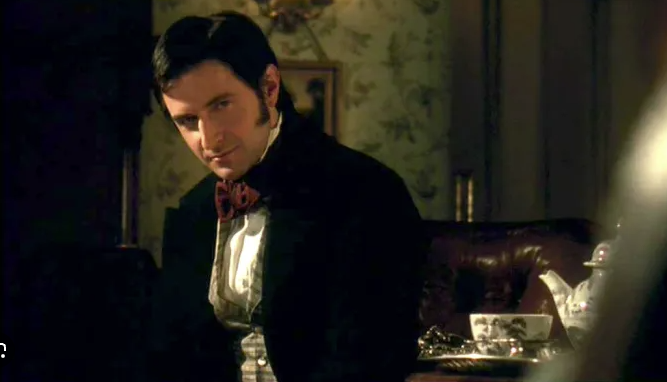
Emotions can run high when contesting for the romantic image that John Thornton has impressed upon our hearts and minds. The question of Thornton's virginity was one of the most hotly debated subjects on the C19 Internet forum in the years following the film adaptation’s release in 2004.
I re-opened the discussion anew in 2013 on a North and South blog that has sadly vanished. I’m introducing the subject again because it’s a profound question concerning Thornton’s core character and how it affects his falling in love with Margaret.
Before we dive into this hot topic, let me make my premise clear at the outset: in seeking an answer to this question I’m looking solely to Elizabeth Gaskell's works, since the only person who can give us the definitive answer would be Gaskell herself.
Any impressions garnered from Richard Armitage's portrayal of the character have no real substantive place in the intellectual wrestling of this issue. However, the emotional and romantic impressions individually cherished by Armitage's portrayal are the untouchable, private province of each individual. Everyone is entitled to believe in her own version of John Thornton, but in this blog discussion we are looking to discover the character as written by Elizabeth Gaskell.
Phew! So serious already! Now let's look to see what inferences we can find in the book…
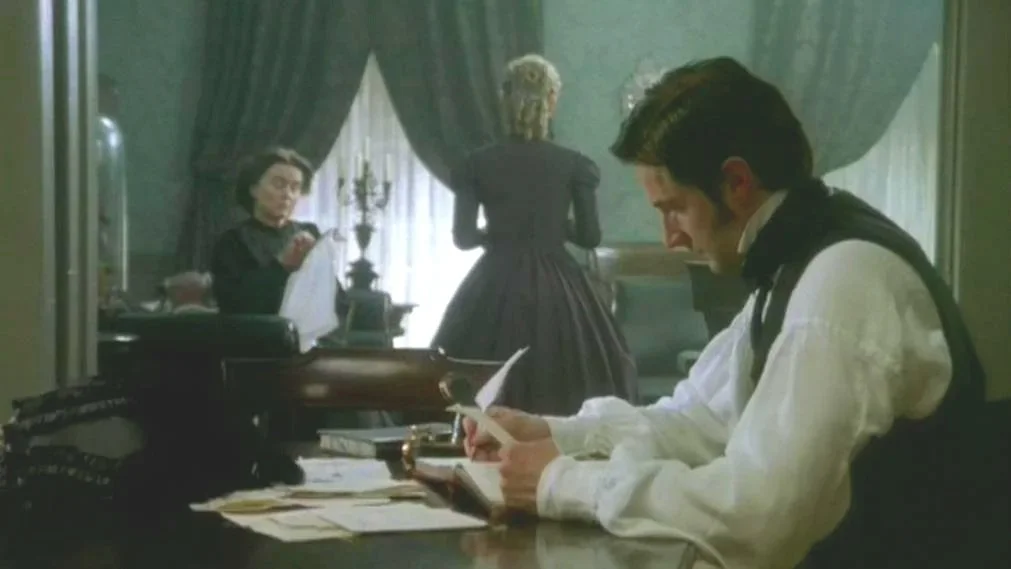
The BBC’s John Thornton at home.
The first glimpse we are given of Thornton's past is what Thornton himself offers in chapter 10 (Wrought Iron and Gold), when he tells the Hales about how he had to find work after his father died. The cold, hard facts are that he moved from Milton at about the age of 15 or 16 to live in a small country town where he took work at a draper's shop. He was the sole provider for his mother and Fanny, and earned 15 shillings a week. His mother taught him to put 3 shillings aside every week.
Mr. Hale provides more information after Thornton leaves, telling us that it is believed that the Thorntons survived on water-porridge for years and that at some point John returned to Milton to pay installments on his father's debts long after the creditors had given up hope of being paid. Thornton was then taken on as a kind of partner by one of these creditors.
Gaskell gives no details as to when and how he became the master of Marborough Mills, but I believe we are to assume he continued to apply the same diligent effort and determination to whatever work he was given in order to rise to such a position.
This basic picture of his history suggests that his life has so far has been primarily consumed by work and the responsibility of providing for his family as well as re-establishing for them a position of dignity and stature.
Yet it's what Thornton himself remarks about his experience that gives us the most insight into his character. He credits his mother's strength and resolve in determining to save money to pay off debts. His respect and gratitude for her guiding hand are summed up in these words:
“I had such a mother as few are blest with.”
Mr. Thornton tells us what he believes he learned in following his mother's austere plan to save three shillings a week:
“This made the beginning; this taught me self-denial…I thank her silently on each occasion for the early training she gave me.
Hot flames coming from this glance! (BBC 2004)
And he goes on to explain the philosophy he has developed from this hard experience:
“Now when I feel that in my own case it is no good luck, nor merit, nor talent, - but simply the habits of life which taught me to despise indulgences not thoroughly earned, - indeed, never to think twice about them, - I believe that this suffering, which Miss Hale says is impressed on the countenances of the people of Milton, is but the natural punishment of dishonestly-enjoyed pleasure, at some former period of their lives. I do not look on self-indulgent, sensual people as worthy of my hatred; I simply look upon them with contempt for their poorness of character.”
He appears to take great pride in being a man of great self-discipline. Whatever pleasures he gains from life, he does not consider them to be self-indulgent or sensual.
I think it's safe to conclude that John would have had little opportunity (or resources) for self-indulgence in those early years of working. I can't imagine him spending money on drink or women. Can you imagine having to explain to Hannah where he'd been?! No, I think John was on the straight and narrow during his teen years.
But is he human, you ask? Wouldn't he have had 'needs'? I'm not implying that John Thornton was the perfect man, but I don't think it's a stretch to believe that he did not fall into the practice of indulging himself. As he said, he didn’t even think of it. He learned to accept and thrive on a pattern of austerity and dedicated purpose.
What about John's later years, after he has established himself as master, wouldn't he have had more time and opportunity, not to mention money, to loosen up a little?
There is little in the book to suggest that Thornton changed his habits. As far as we know, taking lessons with Mr. Hale is the first time he has taken the time to pursue a personal pleasure. At least we get the hint from Hannah's disapproval that this may be an altogether new venture for him.
What does all this have to do with whether or not John Thornton was a virgin before he met Margaret? I believe that Gaskell is making it rather clear that Mr. Thornton was a man of high principles who was consumed by his work, leaving little thought for ought else.
Given his strict habits and abhorrence of self-indulgence as well as his great respect for his mother, I find it hard to imagine that at any time he sought satisfaction with prostitutes or dallied with the farmer's daughter/scullery maid. (Thornton’s treatment of women discussed here.)
You may disagree. I would love to hear what induces you to believe otherwise.
Of course prostitution was rampant in the Victorian era. The strict moral codes of conduct for the middle and upper classes of society regarding marriage and courting left little option for men to acquire their experience. The double standard of the day allowed men to find 'release' from their desires with prostitution, at the expense of degrading countless girls and women to a status that afforded no chance of redemption.
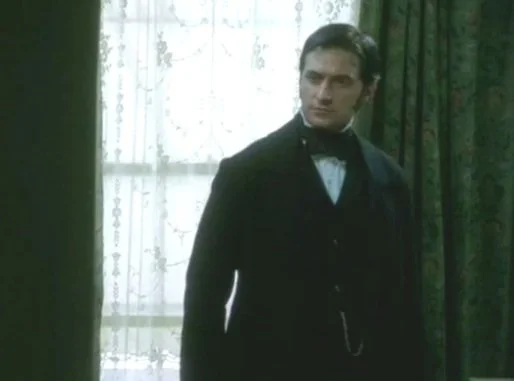
Hopeful Thornton. (BBC 2004)
Could Thornton have had a romantic relationship with a girl or woman at some time in his past wherein he lost his virginity? If he did, then the relationship was immoral and the girl/woman likely degraded. However, there's nothing to substantiate the assumption that he ever had a romantic relationship before Margaret. In fact, Thornton himself declares that he has never been in love before:
I have never loved any woman before: my life has been too busy, my thought too much absorbed with other things.
I take Gaskell at her word here. I think Gaskell sets the story beautifully by showing us how much of an impact Margaret makes on John from the very beginning. From the moment he sees Margaret, he is arrested by her beauty and her dignity. Gaskell goes to great length to describe how this brief encounter is essentially life-altering to Thornton. He has never had this reaction to a woman before.
In this scene of Thornton's first encounter with Margaret Hale, I believe Gaskell is painting a picture of a man wholly unaccustomed to romantic love who is, right before our eyes, undergoing a sexual awakening. It's a beautiful, beautiful thing.